
I run a portfolio of SaaS businesses. Most of the operational work is handled by AI agents. Metric monitoring, reporting, competitive research, content drafts, anomaly detection. Agents do all of it.
And I think "Zero Human Company" is a terrible framing.
The hype
In late February 2026, the ZHC concept exploded. Multiple builders posted about their setups on the same day: agent hierarchies with C-suite roles, hundreds of specialized agents, cron jobs spawning sub-agents. All built independently, all converging on the same architecture.
Polsia launched a platform that creates entire AI-run companies from templates and reportedly hit $1.8M ARR in under 3 months. OpenClaw became the open-source foundation powering many of these projects.
The signal is real. Builders and money are both moving into this space. But the framing is off.
The problem
Lex Fridman published an analysis comparing ZHCs to perpetual motion machines. His argument is simple: agents trading value among themselves don't create wealth. They recycle it. Financial systems, like energy systems, need to draw from genuine external sources.
The examples back this up. An AI vending operator lost $200 per month. Crypto-adjacent ZHC experiments generated volume, but it was mostly agents transacting with other agents. Real value creation from real human customers was almost nonexistent.
That's the core issue. A company with zero humans still needs to sell to humans. And the moment you remove the human who understands the customer, who has taste, who knows when to pivot, you get output, not a business.
What I've actually learned
Running AI agents on real businesses for months, here's what I know:
Agents are incredible at work you'd outsource. If you'd hire a VA, a junior analyst, or a BPO to do it, an agent can probably handle it. Metric reports. Competitor tracking. Content first drafts. Data cleanup. Follow-up coordination. This is the 20-30 hours per week that eats a solo founder's time.
Agents are terrible at work that requires judgment. Strategy. Customer relationships. Product taste. Pricing decisions. Brand voice. Creative direction. These require context that compounds over years of human experience, not days of agent memory.
The 153-agent setup is theater. You don't need hundreds of agents. You need a handful that are deeply connected to your data, run on a reliable schedule, and get smarter over time. The architecture that works is boring: one coordinator, a few specialists, persistent memory, and a trust system where autonomy is earned gradually.
Trust is everything. An agent that reports on day 1, suggests on day 30, and executes within approved boundaries on day 90 is infinitely more valuable than one that tries to do everything from the start. Progressive autonomy isn't a feature. It's the whole product.
The right framing
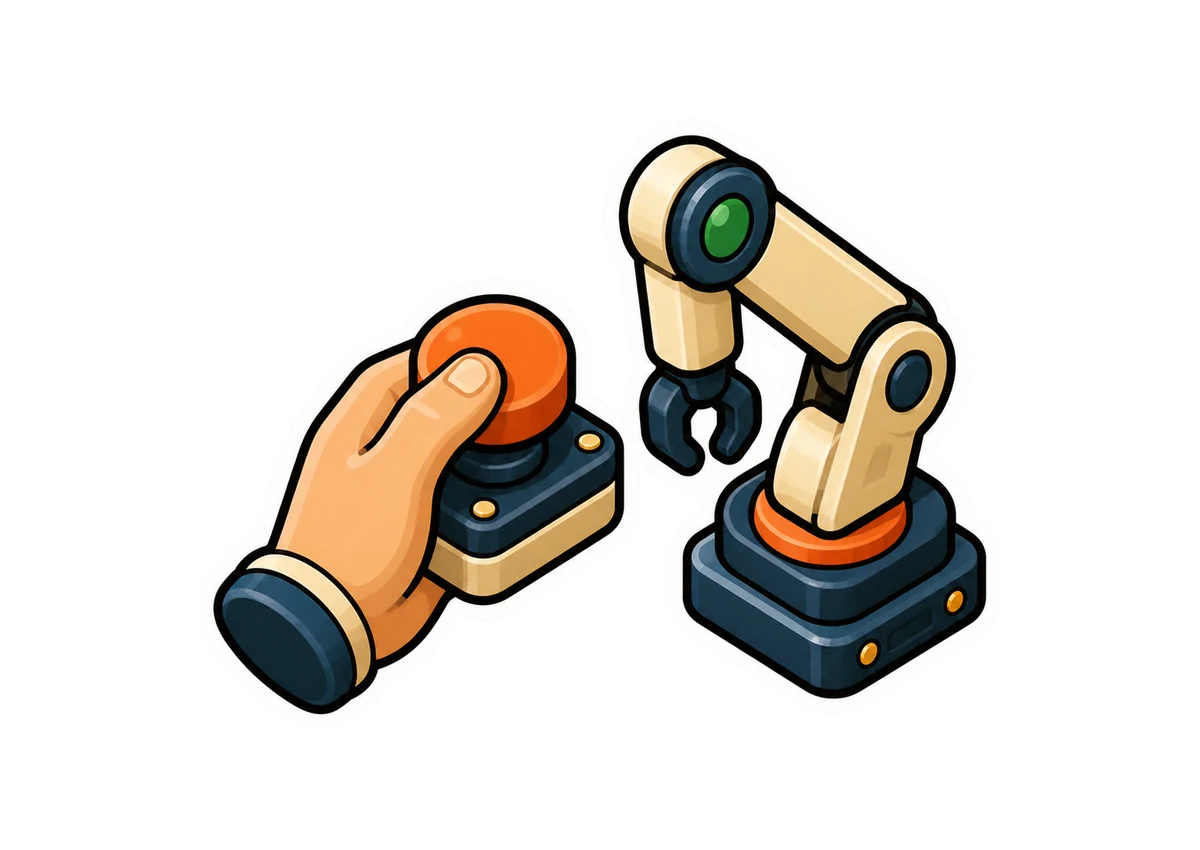
The goal isn't zero humans. The goal is zero humans doing work they hate.
One founder. An autonomous company that handles operations. The founder sets direction, judges quality, and makes the calls when things get ambiguous. The agents handle everything that's repetitive, rules-based, and doesn't require taste.
That's not a zero human company. It's a one-human company with an AI operating system. And it works today.
What to actually do
If you're a founder, don't start with 153 agents and a fantasy org chart. Start with this:
Connect your revenue and traffic data. Stripe and your analytics tool. That's it. Get a daily briefing that tells you the state of your business every morning.
Add automated reporting. Weekly summaries, monthly reports, competitor briefs. Agents are excellent at pulling data and finding patterns.
Then, and only then, add execution. Content drafts. Social posts. Email sequences. Things where a mistake is cheap to fix.
Never automate strategy. That's where ZHC experiments die. Keep yourself in the loop for anything that requires understanding your customer.
The ceiling keeps rising. What agents can handle today is dramatically more than a year ago. But the answer isn't removing yourself from the equation. It's removing the work that was never a good use of your time in the first place.
Related reading
- Autonomous business agents
- AI agents for business operations
- AI CEO for startups
- The one-person company, powered by AI agents
- Best agentic AI tools for business
That's what we're building at win.sh. An autonomous company for your existing business. Not a fantasy company with zero humans. A real one with one human and agents that actually deliver.